Teeth Staining Removal

Intrinsic and Extrinsic Stains
Two different types of stains occur in teeth: the intrinsic, coming from internal sources that are now beyond our control…and the extrinsic, coming from external sources. Examples of intrinsic factors include early exposure to certain chemicals such as tetracycline or excess fluoride. Both of these can stain teeth. These types of stains inhere in the tooth itself and you can’t remove them simply by brushing.
Extrinsic factors, on the other hand, include food and drink that stains—for example, coffee, wine or other highly acidic foods. Switching from hot to cold foods will often cause the pores in your enamel to open and then close, trapping food particles just under the surface. Yet another reason, folks, not to cook your food!
Erosion and Cracks in the Enamel are the Culprits
Actually, teeth are not naturally supposed to be pure white, but rather more white-ish. As we age, teeth tend to darken slightly because the dentin (the dental tissue, just under the enamel, which determines tooth size and shape) becomes exposed due to inevitable erosion and cracks in the surface enamel. The dentin, less dense than enamel, absorbs food colors more easily. Stained teeth is often one reason people on the raw food diet go in search of natural whitening products, when in fact they might just need to re-enamelize their teeth.
Chew Leafy Greens for Remineralization
Chewing leafy greens daily on the raw food diet will accomplish this remineralization and help to build the enamel. This method will also stimulate the saliva production so essential to healthy teeth and gums. Some people on the raw food diet might think that the greens are responsible for staining, when in fact chewing greens is what will help to keep them healthy and bright.
Try Soap+Salt Brushing
A good solution for clean teeth, which I have used for a number of years, is simple unscented bar soap. Wet the brush, swipe the bar two or three times with it, add some sea salt, then brush your teeth thoroughly and your gums gently. Rinse. The combination of soap and salt effectively cleans and disinfects teeth and gums and neutralizes plaque acids. Salt also helps to curb bleeding gums and lessens the reactions of sensitive teeth to heat and cold. Once teeth are thoroughly clean, they can then be remineralized by adding calcium and phosphorus to the diet.
Bentonite Oral Balm
Not everyone likes the flavor and messiness of of brushing with the soap and salt mixture. Moreover, salt and soap alone do not provide any herbs that have antiseptic and astringent properties useful in preventing and treating gum disease. Hence, I developed the Bentonite Oral Balm With White Oak Bark and Wheatgrass Extract, providing an unbeatable combination to leave your mouth fresh, clean and healthy.
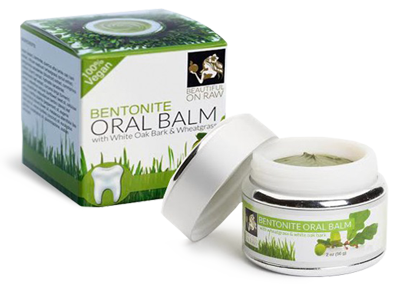
Bentonite Oral Balm
With white oak bark & wheatgrass.
Additional Advice
In addition to brushing with soap and salt or the Bentonite Oral Balm and chewing leafy greens, there are a few more things you can do to ward off teeth stains:
… drink your vegetable juices through a straw to minimize contact with tooth enamel
… don’t overbrush, which only results in wearing the enamel even further
… brush with a combination of baking soda and salt, or a paste made of lemon juice and salt
… mash fresh strawberries (which contain an enzyme that whitens teeth) and rub on your teeth for about a minute, then rinse and floss to remove any seeds.
Now, let’s see that SMILE!
If you arrived to the raw food diet with more serious teeth issues such as implants or root canals as I did, you may want to take a look at my e-book The Raw Food Diet and Your Compromised Teeth, now in its 2nd Edition.
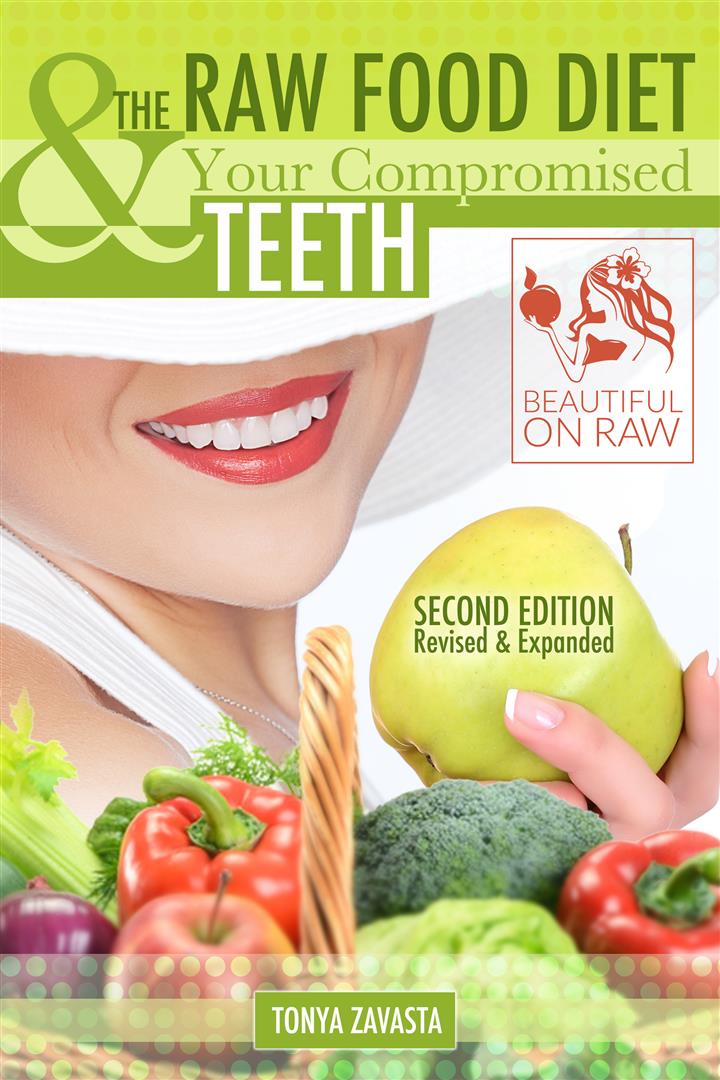
The Raw Food Diet
and Your Compromised Teeth