
Mewing, Eye Bags, and the Angle of Youth: How They're Connected
Published: (September, 2026)
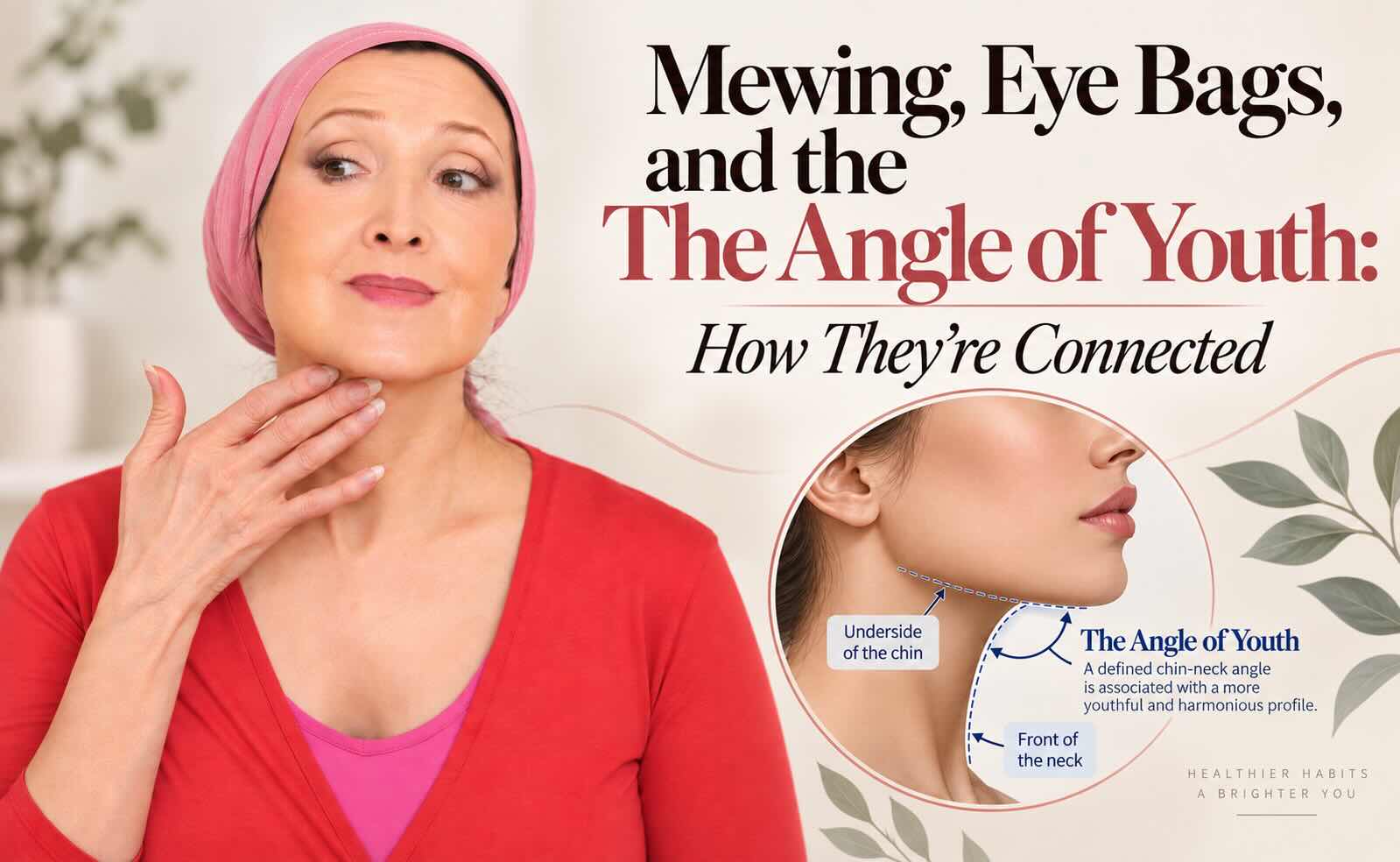
1. Mewing and the “Angle of Youth”: What’s the Connection?
You’ve probably heard of mewing—and maybe even seen dramatic before-and-after photos online that claim tongue posture can reshape the face and create a sharper jawline.
The idea comes from Dr. John Mew, who developed an orthodontic approach called Orthotropics. His son, Dr. Mike Mew, later helped bring these ideas to a much wider audience online.
At the center of their teaching is a simple idea: how you hold your tongue, lips, jaw, and head may influence how your face and jaws develop, especially while you are still growing. They also believe that habits like mouth breathing, keeping the lips open, or letting the tongue rest low in the mouth may affect the way the face and jaw grow over time. So what does a healthy tongue position actually look like?
Where Should Your Tongue Rest?
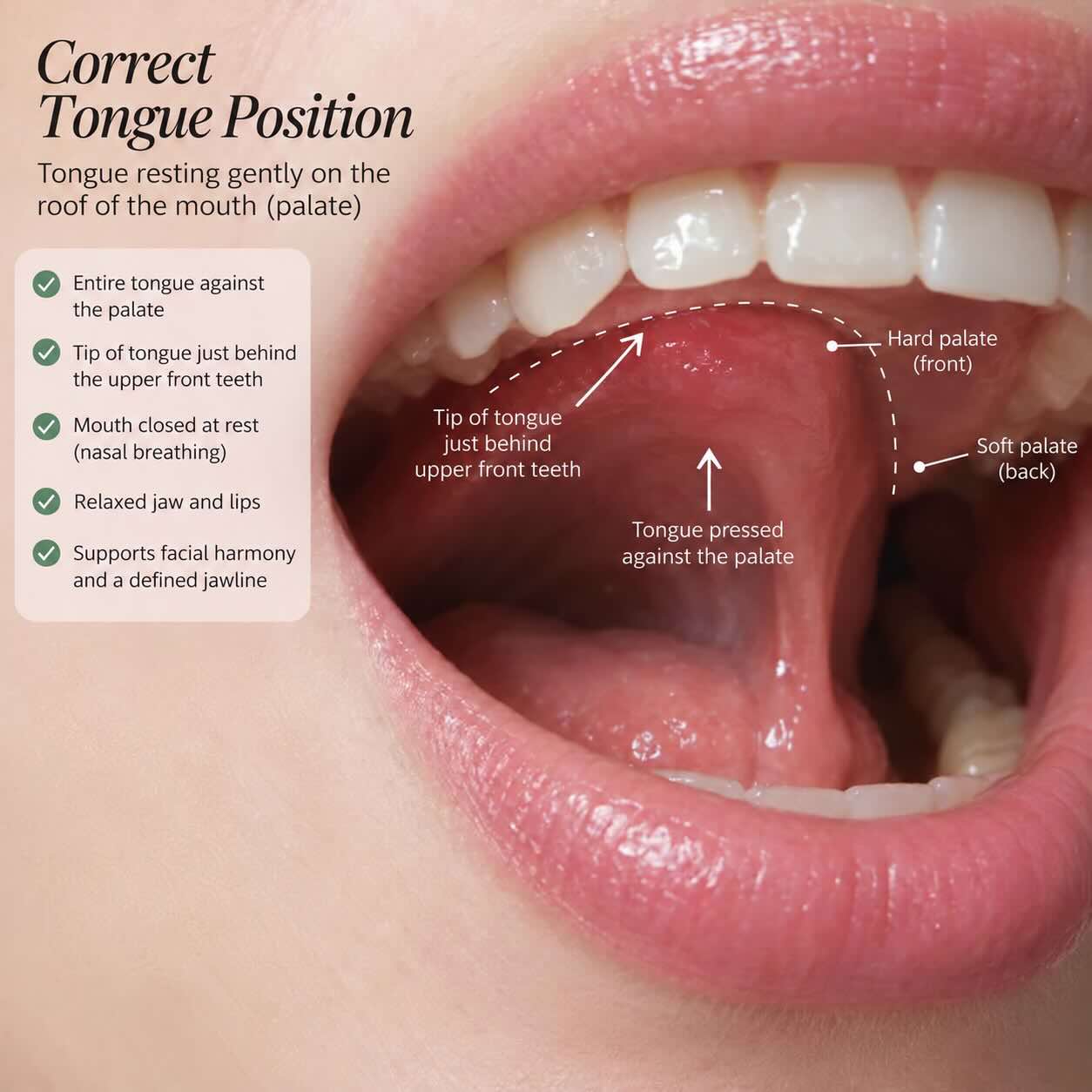
Your tongue should rest gently against the roof of your mouth.
The tip should sit just behind your upper front teeth, without touching or pushing against them. To find this spot, say “la, na, da” and notice where the tip of your tongue naturally touches. Let the rest of your tongue rest upward against the roof of your mouth as well.
Keep your lips closed and breathe comfortably through your nose.
While oral posture may influence facial development in younger people, it’s unlikely to reshape the jaw bones in adults, especially in our 50s, 60s, and beyond. But that doesn’t mean mewing has no value as we age. And this is where the “angle of youth” or "beauty angel" comes in.
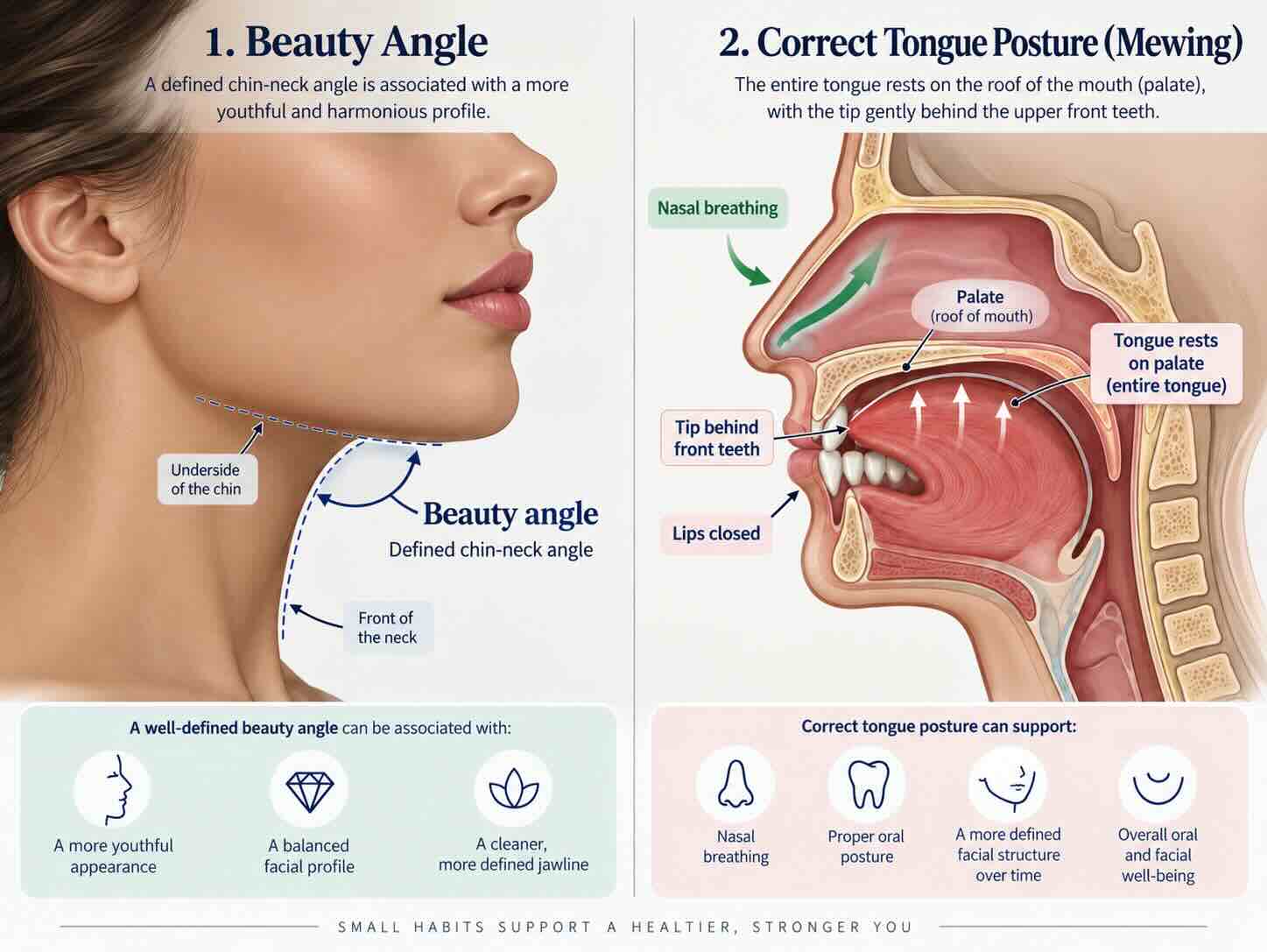
The angle of youth is the clean, defined angle where the underside of the jaw meets the neck. When that area looks sharper and more lifted, the profile tends to look more youthful. As we age, changes in muscle tone, posture, skin elasticity, and soft tissue can soften that transition.
Mewing encourages the tongue to rest against the roof of the mouth, the lips to stay gently closed, and the jaw and neck to maintain better alignment. When the tongue is held against the palate, the floor of the mouth and the tissues under the chin are positioned differently, which can make the jaw-to-neck transition look cleaner and more defined while that posture is being maintained.
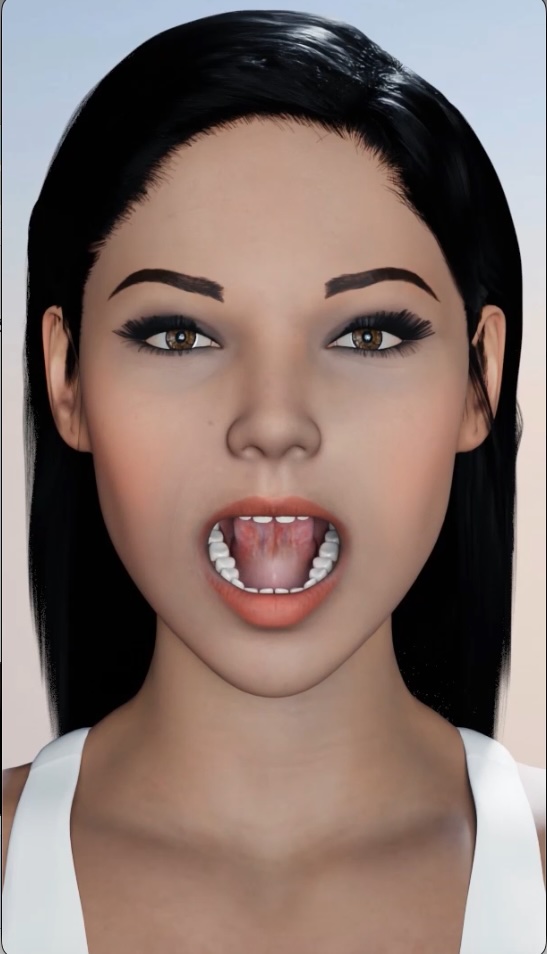
Mewing Explained in 20 Seconds
Place your tongue against the roof of your mouth, with the tip just behind your upper front teeth. Create gentle suction, hold for about one second, then release with a “pop.” Repeat 10 times.
One thing is clear: the position of your tongue can change how the area under your chin looks. When your tongue rests against the roof of your mouth, the muscles and soft tissues under your tongue lift a little. This makes the area under your chin look tighter or smoother. A simple way to think about it is:
Tongue position → muscles under the tongue → tissues under the chin → appearance of the neck.

2. Eye Bags: Does Your Sleeping Position Matter?
When your face is pressed into a pillow for hours, your skin is under constant compression. I’m sure you’ve seen it firsthand — you wake up after sleeping on your side with lines pressed into your cheek, or, God forbid, after sleeping on your stomach with your face completely squished!
Those creases usually fade, but repeatedly pressing the same areas of your face into a pillow can contribute to more noticeable sleep lines and creases over time. Stomach or side sleeping can be especially unkind to the delicate eye area, because your face is pressed downward into the pillow, which will make morning puffiness and under-eye bags look more pronounced.
That is one reason I have been striving to sleep on my back. Your face will thank you for it, too.
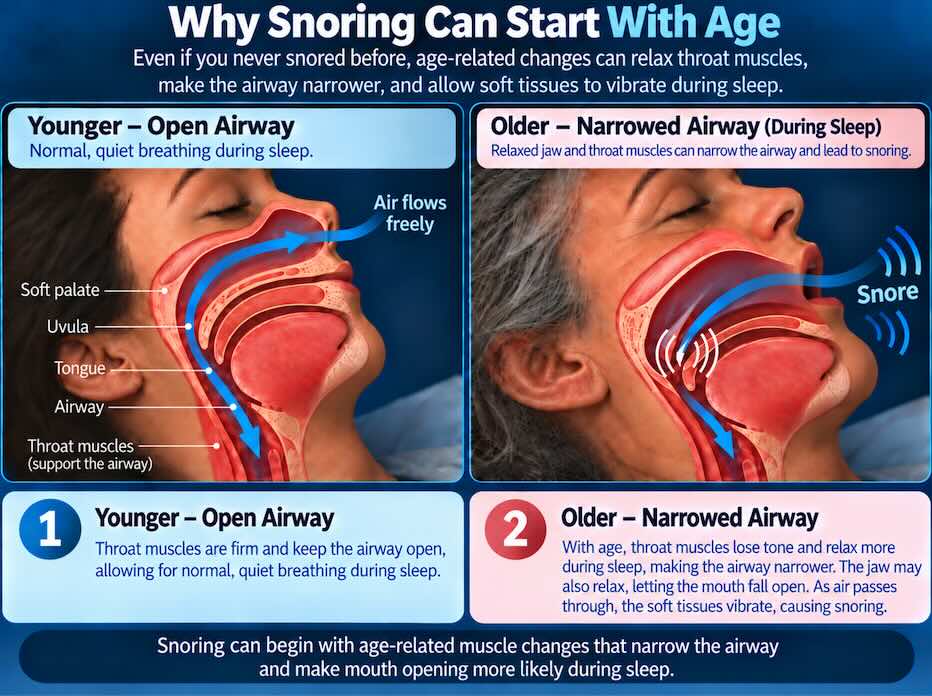
But as we get older, back sleeping can become more challenging. The muscles and soft tissues around the throat gradually lose some tone, and during sleep they relax even more. This can narrow the airway and make snoring more likely — even if you never snored when you were younger.
Sleeping on your back can make it worse because the tongue and other soft tissues may shift backward toward the throat, narrowing the airway further.
So we end up with a dilemma: our face may love back sleeping, while our airway may not.
That is why I still think it is helpful to pay attention to tongue and jaw posture during the day. Yes, practice “mewing” — gently resting your tongue against the roof of your mouth, keeping your lips comfortably closed, and breathing through your nose when possible. Whenever you remember, simply bring your tongue back into that position.
I also like doing tongue exercises before bed. There are anecdotal reports that these exercises may help improve muscle tone around the tongue and throat, and that has been my experience as well. With regular practice, the muscles may feel more engaged and the correct tongue position can start to feel more natural.
It takes time — weeks or even months — but with consistency, you may build a better resting tongue posture and feel more comfortable lying on your back.
The key is not to force it. If back sleeping makes you snore heavily, wake up gasping, or leaves you exhausted during the day, your sleep quality is far more important than avoiding a few wrinkles.
Tongue circles are another simple exercise that works the tongue and surrounding mouth muscles. Doing this exercise regularly makes your tongue work through a wide range of movement. Over time, exercises like this may improve tongue control, coordination, and muscular endurance. Stronger and better-coordinated tongue and throat muscles are one reason myofunctional therapy is being studied for snoring and sleep apnea: better muscle tone may help the upper airway stay more stable during sleep.

Place the tip of your tongue against the gum just above your upper teeth, behind your upper lip. Slowly move your tongue around the outside of your teeth and gums in a large circle, pressing gently but firmly as you go.
Complete 10 circles clockwise, then 10 circles counterclockwise.
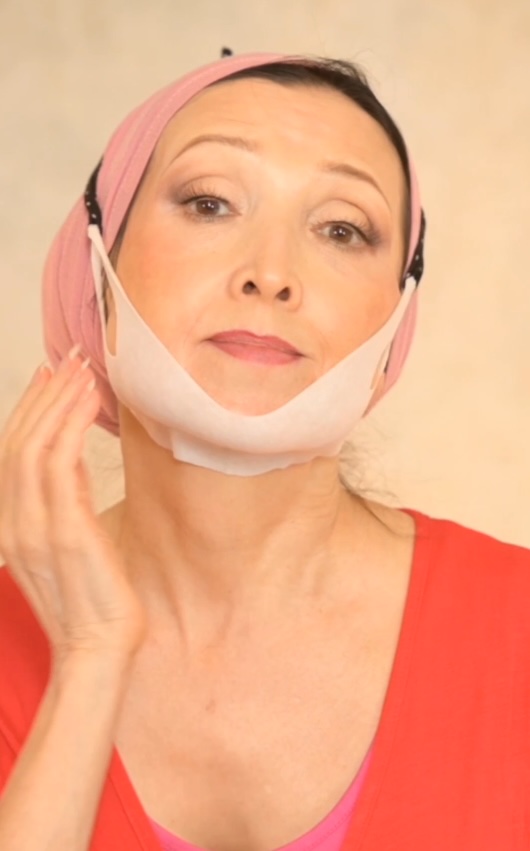
Featured Product: WrinkAlign Cheek & Chin Push Up Sling- pack of 5!
See my recent video on the left: The “Angle of Youth” Beauty Trick .
One of my longtime beauty secrets: overnight patches. I’ve used them for decades, and with consistent use, they can do wonders for ironing wrinkles while you sleep.
This Pushup Cheek & Chin Sling is especially designed for the jaw and neck area, helping support the appearance of a smoother, more defined Angle of Youth.
Wear it for a few hours during the day—or sleep in it overnight.