
Aging & Your Hair: Why It Thins and How to Help It
Published: (January, 2026)
1. Hair, Aging, and Renewal
Looking Back on 2025 with Gratitude
This is a time to reflect on the past year. This month, I'm turning 68.
Because I’m now on Medicare, my health insurance covers gym classes—and I’ve discovered several that I truly love. Yoga, balance, and mobility classes have become my favorites. And of course, taking online and live dance classes has been one of the highlights of the past year.
What makes me especially happy is something deeper than exercise itself:
I no longer have to explain my hip limitations to every instructor, as I did for years.
For the first time in my life, I can simply be part of a group—without standing out, without needing special treatment. People with injuries like mine are often expected to sit on the sidelines… or in a wheelchair. That was my reality for many years. But not anymore. This year, everything began to change. You really can get better with age.
Being among the 65+ crowd every day—and thanks to my observant nature—I can’t help but notice the challenges that come with aging. Some of them we inevitably have to accept. Others, however, can be minimized or slowed down.
One of the most common concerns is hair. Of course, there are rare exceptions—people blessed with a genetically full head of hair. But for the majority, changes are obvious: a receding hairline, hair growing lower and thinner around the face, overall thinning, or loss at the crown (the top-back of the scalp). This is especially common in women and is often referred to as female pattern hair loss.
It reaches a point of real desperation for some. I recently learned about a cosmetic technique for very thin hair or a visible scalp, popular among older adults. It's called Scalp Micropigmentation (SMP). It uses tiny pigment dots to mimic hair follicles and reduce scalp contrast. My hope is that with proper care and natural, consistent support, we won’t need to resort to such drastic measures.
Accelerated Scalp Aging
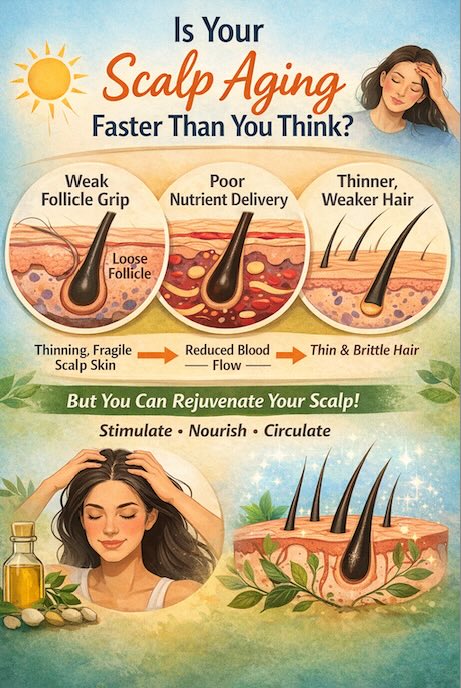
Did you know your scalp can age faster than the rest of your body?
The scalp can age faster because it is often exposed to sun and stress, experiences reduced circulation, and receives far less care than the face. Over time, this can lead to thinner scalp skin, slower cell renewal, and less support for healthy hair growth.
Years of hair transplant research revealed an important insight: hair follicles are more resilient than once believed. Their success depends greatly on the scalp environment they’re placed into. This shifted scientific thinking away from blaming the follicle itself and toward the health of the surrounding tissue.
What it means for us? With gentle stimulation, improved circulation, and proper nourishment, the scalp can remain healthier—and better able to support strong, vibrant hair—well into later years.
2. Daily Scalp Stimulation
As we age, individual hair strands can become finer and weaker as their diameter gradually decreases. Less thickness = more fragility and visible thinning. One of the most effective ways I’ve found to support the scalp is daily circulation stimulation.
The Violet Ray (High Frequency) has been my go-to since 2007.
I went to great lengths to source the best Tesla coil, because in my experience, nothing compares when it comes to supporting thinning hair and hair loss.
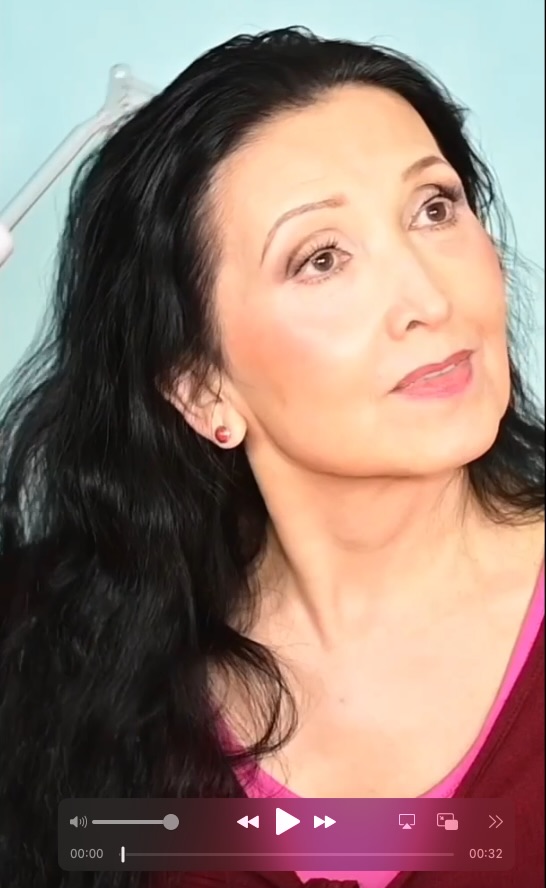
With consistent use—yes, daily—even at 68, I’ve seen my hair grow about ⅔ of an inch per month, faster than the average rate. I love long hair and plan to keep it well into my 70s.
Remember: strong hair begins with a healthy scalp terrain. High-frequency scalp treatments use gentle electrical currents to create ozone, which helps revitalize the scalp by boosting circulation, increasing oxygen and nutrient delivery to the follicles, reducing bacteria, and supporting cell renewal. The result is a healthier scalp environment that strengthens existing hair and can help stimulate growth by re-activating dormant follicles.
If you’ve noticed that you’re losing more hair lately, don’t panic. Instead of focusing on the hair itself, shift your attention to revitalizing the scalp. In addition to High Frequency Ray treatments, our Scalp Tonic with Cayenne Pepper & Mustard Greens Extracts can really help nourish the scalp terrain. With consistent care, give it a few weeks—and then start looking for signs of new hair growth.
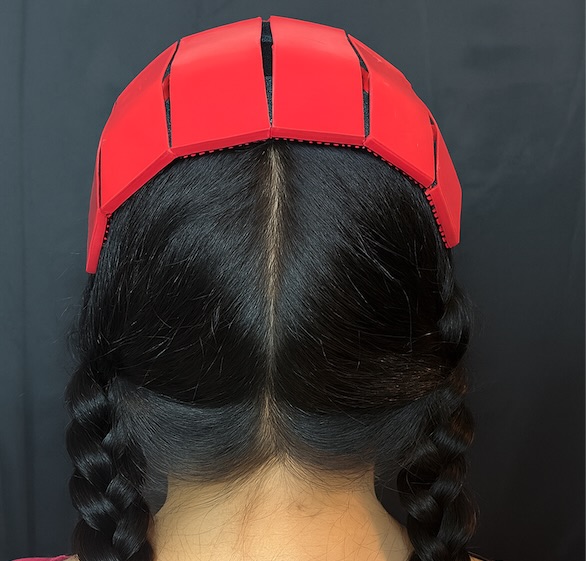
One of the most common places women notice thinning is the top-back of the scalp. This area often receives less natural circulation, is affected by posture and sleeping habits, and tends to be overlooked in daily scalp care. Over time, reduced blood flow can lead to finer, weaker hair strands and slower growth.
Many of you already have our RejuvaRoller, and it works on the same principle. The RejuvaBelt offers the same benefits.
The best thing about this RejuvaBelt is that it works on your scalp while you’re busy doing something else—reading, writing, or even cleaning the house. Keep it on for 10-15 min or even longer. I’m wearing it right now as I work on my newsletter.